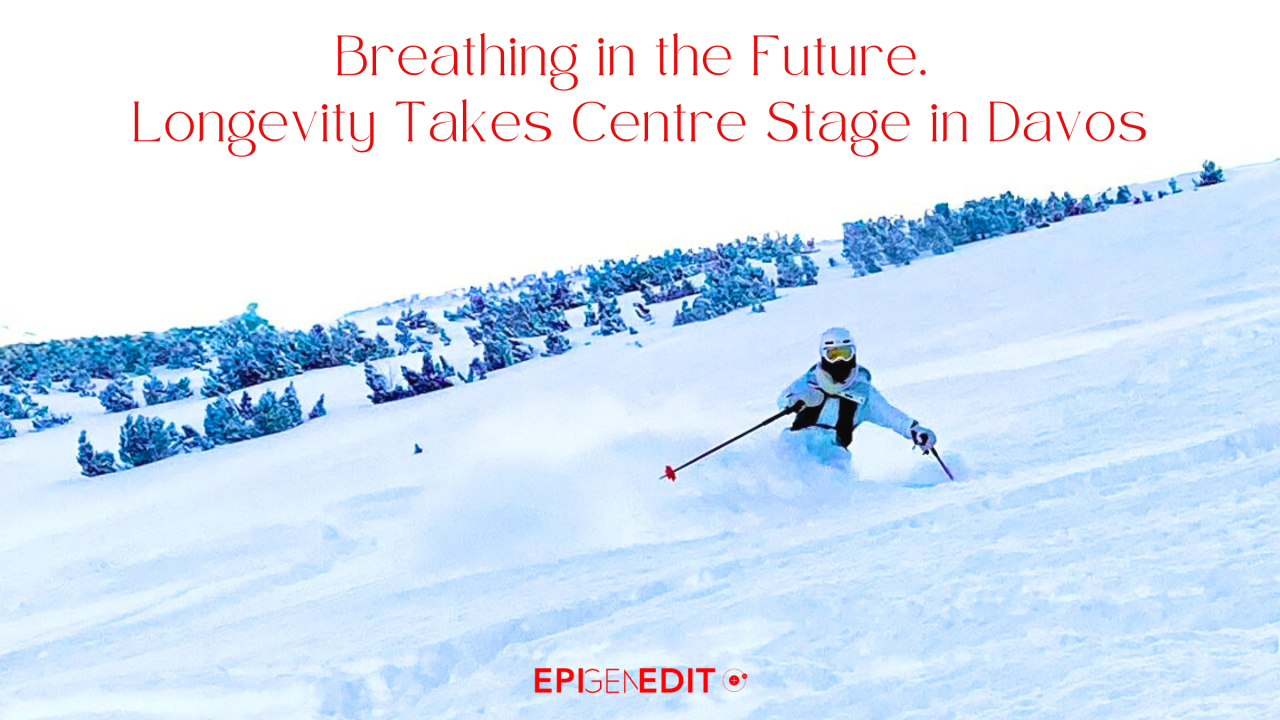
At 1,560 metres above sea level, the crystal-clear air at Davos fills the lungs of the most influential people in business and politics for the World Economic Forum . This year’s theme was the “Spirit of Dialogue”. Amidst the intense geopolitical conversations, leading voices came together to discuss longevity.
Where Longevity, Capital and Science Converge
On January 20th, the fifth edition of the Longevity Investors Lunch (LIL) brought together investors, scientists, founders and medical leaders to explore not just how long we live, but how well.
Curated by Marc P. Bernegger and Dr. Tobias Reichmuth, Dr. Reichmuth has said that longevity is developing at an extraordinary pace. However, many still struggle to identify where the meaningful inflexion points truly lie. LIL in Davos exists to filter the noise and connect investors with solutions that genuinely improve healthspan.
The Longevity Economy: Why This Moment Matters
The numbers alone demand attention:
- The longevity sector is projected to grow from $15 trillion in 2020 to $27 trillion by 2030
- Adults aged 50+ contributed $45 trillion to global GDP in 2020
- By 2030, one in six people worldwide will be over 60
- By 2050, the over-60 population will more than double to 2.1 billion people
Longevity is no longer a niche. It is the largest addressable market in human history.
Designing Longer Lives, Not Funding Longer Decline
The World Economic Forum’s Longevity Economy Principles, developed with Mercer and more than 35 global organisations, outline six priorities for funding longer lives:
- Universal financial education
- Healthy ageing infrastructure
- Multigenerational workforce evolution
- Social connection
- Addressing inequality
- Flexible social systems
These pillars define structure and intent. But progress ultimately depends on biology and the physiology that governs ageing itself.
How Oxygen Can Support the Longevity Economy
In the Davos mountains, we become more aware of breath because the air is so pure and clear.
Oxygen is the most basic biological transaction we make. And longevity science is finally treating it as such.
Peer-reviewed research published in Aging has shown that hyperbaric oxygen therapy (HBOT) can reverse two key hallmarks of ageing at a cellular level. In adults aged 64 and older, a structured protocol of 60 sessions resulted in:
- 20–38% increases in telomere length
- 11–37% reductions in senescent (“zombie”) cells
Telomeres lengthened. Senescent cells cleared. Ageing biology shifted from the inside out.
These mechanisms mirror what happens at altitude. Alternating between oxygen-rich and oxygen-normal states triggers adaptive stress responses in the body, upregulating antioxidant pathways and activating regenerative cascades.
That’s why I co-designed Epigenedits Swiss-engineered hyperbaric chamber to create a vessel of renewal. Longevity, in this context, is not about fighting time. It is about working intelligently with biology.
How the longevity economy can thrive
What emerged in Davos was a clear consensus: for the longevity economy to thrive, it must move beyond theory. It requires accessible, actionable medicine – supported by robust data, sustained investment and real innovation – alongside a growing recognition that ageing is not inevitable decline, but a process we can meaningfully influence.
Final Thought
“Oxygen is the vital molecule of life. It fuels us, repairs us, and sustains every cell in the body. And it can help us live healthier, stronger, and better.”
Dr. Katrin Dreissigacker | Co-Founder EpigenEdit
Data Sources:
- World Economic Forum (2025) – Future-Proofing the Longevity Economy: Innovations and Key Trends
- Brookings Institution (2024) – The Age of the Longevity Economy
- United Nations Department of Economic and Social Affairs (UN DESA) – World Population Ageing
- McKinsey Health Institute – Healthspan Science May Enable Healthier Lives for All
- Hachmo Y. et al. (2020) – Hyperbaric oxygen therapy increases telomere length and decreases immunosenescence in isolated blood cells: a prospective trial, Aging