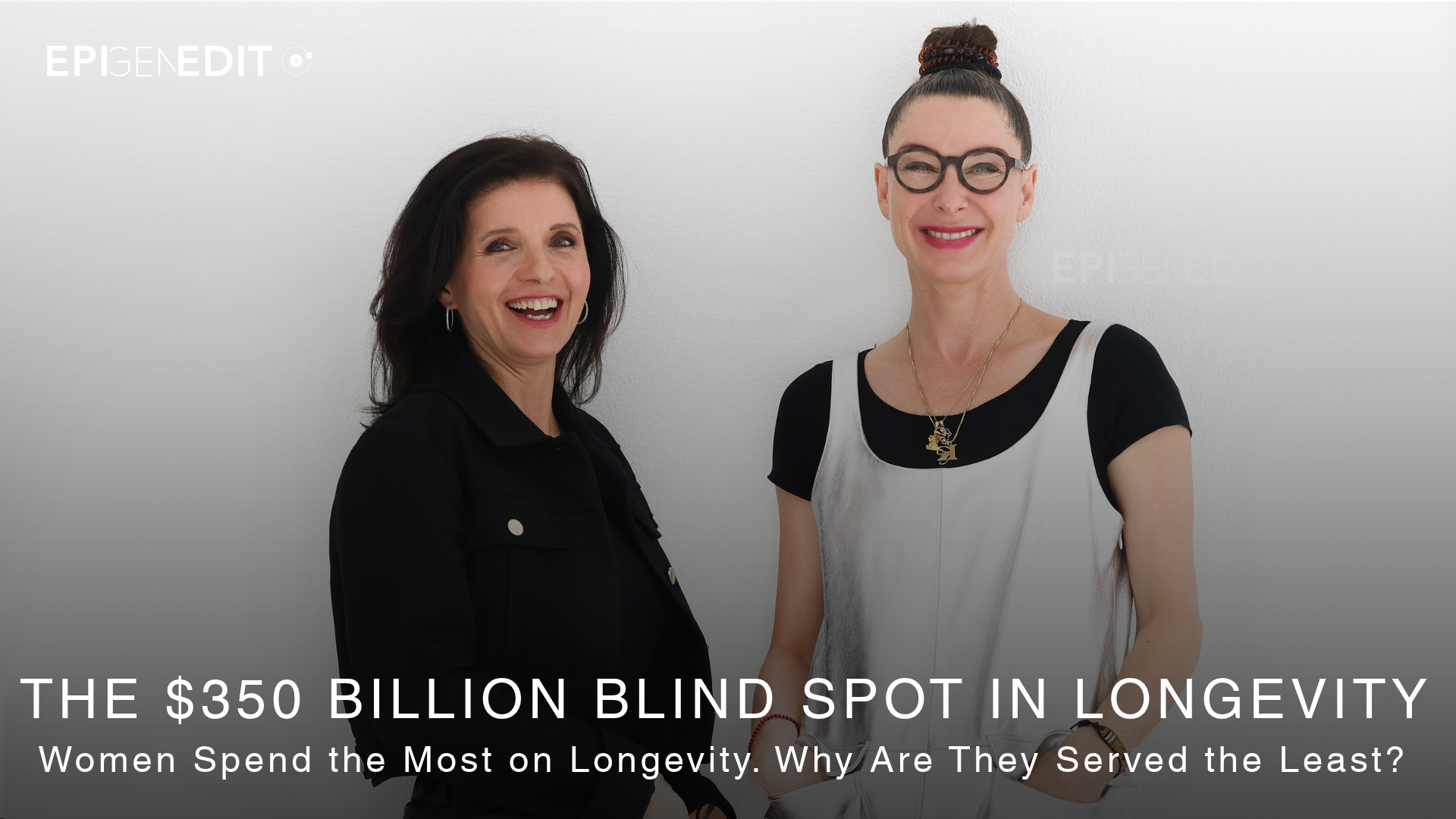
I’ve spent nearly 30 years working with women in midlife. Many of them share the same quiet frustration. They are doing everything they have been told to do, and they still feel the system was not built with them in mind.
A new study from Boston Consulting Group suggests they are right.
The most committed consumers, and the least served
BCG surveyed 10,608 people across 12 countries for the St. Moritz Longevity Forum. Its findings on women in perimenopause and menopause are hard to ignore:
- They act the most. They adopt longevity interventions at rates 15 to 22 percentage points higher than other women or men.
- They spend the most. A median of $84 a month, against $68 for other women and $73 for men.
- They are no more satisfied. Satisfaction sits at around 50%, the same as every other group.
BCG estimates the unmet demand at $350 billion.
The market arrives ten years late
The detail that stayed with me is timing. Women’s interest in long-term health typically begins in their mid-30s, often prompted by hormonal shifts or fertility challenges. Men show no comparable shift until roughly a decade later.
Yet, as BCG’s Parul Bajaj puts it, “companies wait for menopause before they start talking to women about long-term health.”
There is a care gap too. 72% of women who seek help for hormone-related issues say they felt taken seriously. For heart-related care, the figure is 85%.
Closer to home
In September, my co-founder Danijela Schenker spoke at the premiere of MenoWorld in Zurich, the first Swiss festival dedicated to menopause. She joined PD Dr. Daniela Paepke for a panel titled “Healthy Aging: Menopause as an Upgrade for a Healthy Life”. The festival was open to women from 35, which is exactly the age at which BCG finds interest begins.
More than one million women in Switzerland are going through menopause right now. The festival drew a crowd of them who wanted to understand their hormones and their long-term health. That is the shift I want to see across our industry. Menopause does not have to be something women simply get through. Understood early, it is a chance to make more deliberate choices about how we age.
The science is catching up
In August, researchers at the Buck Institute published a perspective in Cell arguing that female biology belongs at the centre of ageing research. They describe the ovary as a communication hub whose signals help coordinate metabolism, bone, immune function and the brain. In their view, menopause is more than oestrogen loss. It is the point where that coordination begins to falter.
What this means for you
- Start earlier. Your mid-30s are the time to understand your baseline, not your 50s.
- Ask how a protocol was tested. Much of longevity research was built on male biology. It is fair to ask what is known about women.
- Expect to be taken seriously. Hormonal health is long-term health, and it deserves the same attention as your heart.
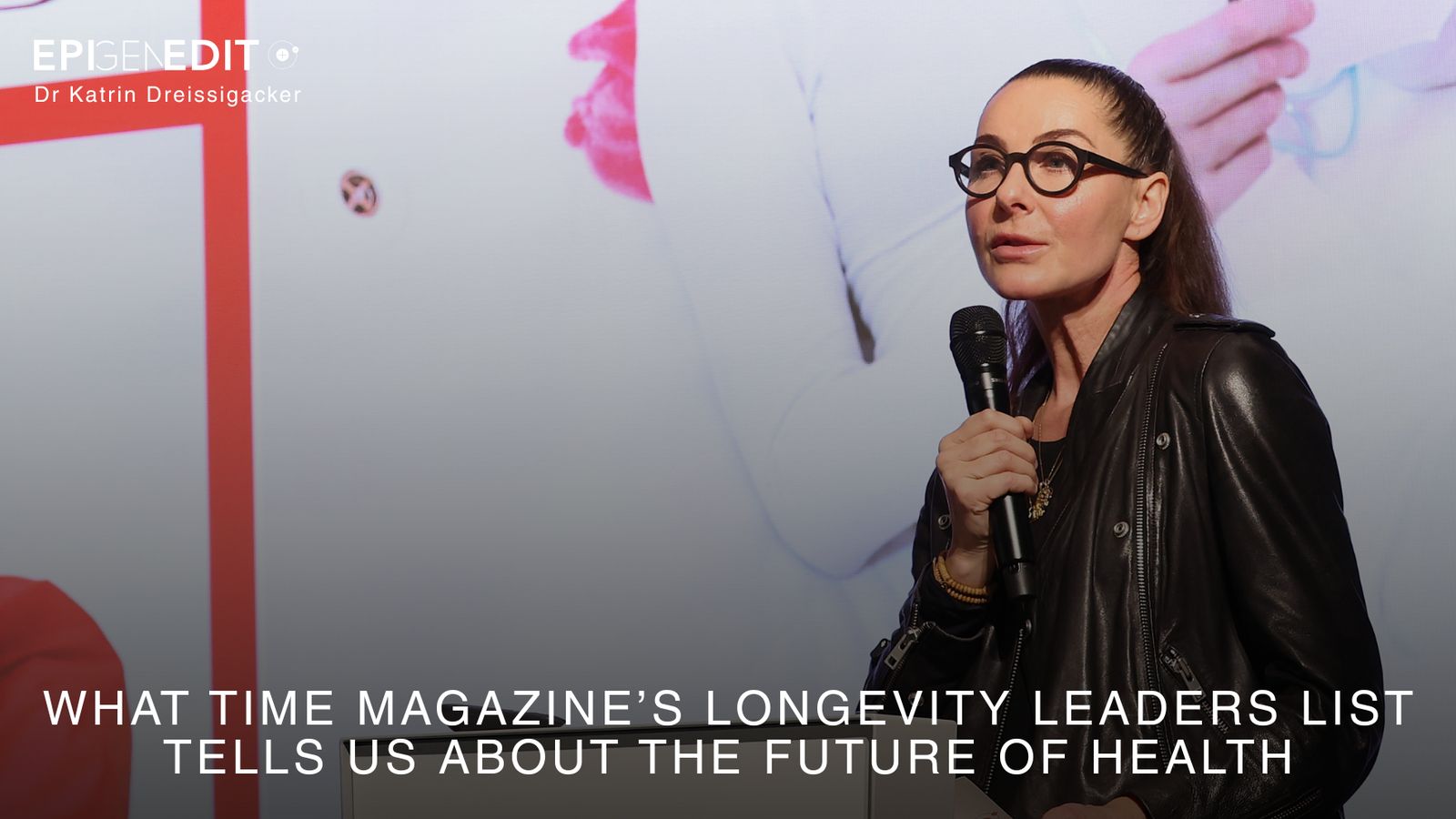
As a physician and co-founder of EpigenEdit, Dr. Katrin Dreissigacker has spent three decades at the intersection of medicine and longevity. Her view:
“Women have been telling the longevity industry what they need for years. Our job now is to listen, and to start that conversation a decade earlier.”
Dr. Katrin Dreissigacker
Age by deisgn. Not decline.
Sources
- Boston Consulting Group, The $350 Billion Longevity Mismatch in Women’s Health, September 2026.
- Buck Institute for Research on Aging, perspective on female biology and ageing, Cell, August 2026.
- MenoWorld Festival, Volkshaus Zürich, 20 September 2026.